
Living in Orlando, Florida means high humidity and long cooling seasons that put extra stress on mobile home air conditioners. If your rooftop package unit or wall-mounted system struggles during a Heat Index spike near Lake Eola or across Winter Park, you need clear next steps. This post explains what to expect during an AC repair visit, what common mobile home issues look like, simple checks you can do safely, and when to call a licensed technician from QUICK AIR USA – AC Services. If you need urgent attention after hours or during storms on I-4, see our Emergency HVAC Repair options and call (866) 207-8555.
Key takeaways
- Mobile-home AC systems are compact and require specific mounting, duct, and electrical checks you should not skip.
- You can perform basic checks like thermostat settings, filter condition, and breaker status before calling a pro.
- Call a licensed HVAC contractor for refrigerant leaks, compressor failure, electrical faults, or when the condenser is inaccessible.
- QUICK AIR USA – AC Services provides emergency responses in Orlando and can assess whether repair or replacement is the most cost-effective option.
Why mobile home ACs need special attention in Orlando
Mobile home air conditioners and packaged rooftop units are different from split residential systems in several ways, and Orlando climate makes those differences important.
- Compact condenser and evaporator locations increase the risk of airflow obstruction and mold growth in high-humidity months.
- Electrical supply and breaker sizing in older parks near Maitland or Conway may not match modern loads, raising the chance of nuisance trips or unsafe wiring.
- Access can be limited: rooftop units require safe ladders and brackets; wall sleeves need careful sealing to avoid water intrusion during summer storms.
Because of these factors, a technician must be familiar with mobile home mounting, shore power or park pedestal limitations, and local code for HVAC service. When you schedule service, confirm the technician is experienced with mobile home systems and has proper licensing.
Quick checks you can do before calling for AC repair
Before you book an air conditioner repair, run these simple, safe checks. They often resolve easy problems and help your technician diagnose faster.
- Thermostat: Ensure it is set to cool and a couple of degrees below room temperature. Replace batteries if it is battery powered.
- Filter: A clogged filter reduces airflow and can mimic a refrigerant problem. Replace or clean the filter if dirty.
- Breaker and disconnect: Check the main breaker and the outdoor unit switch. If the breaker trips repeatedly, do not keep resetting it.
- Outdoor coil clearance: Trim vegetation and remove debris so the condenser can breathe. In Orlando, pollen and grass build-up are common.
- Condensate drain: On wall-sleeve units the drain can clog and activate a safety switch that shuts the unit down. Look for water pooling inside.
If any check reveals an electrical smell, melted wiring, or you cannot safely access the unit, stop and call a licensed HVAC contractor.
Common mobile home AC problems and what they mean
Recognizing typical failures helps you decide whether to call for emergency service or schedule a routine repair.
- No cooling but fan runs: This often indicates low refrigerant due to a leak, or a failed compressor. Refrigerant service requires a licensed technician.
- Weak airflow: Usually blocked filters, a failing blower motor, or duct leaks in the underbelly of the mobile home.
- Unit will not start: Check breakers first. If the breaker is fine, the contactor, capacitor, or control board may be at fault.
- Short cycling: The system turns on and off frequently. Common causes include improper refrigerant charge, oversized unit, thermostat placement near heat sources, or electrical problems.
- Ice on evaporator coil: This points to poor airflow or low refrigerant. Running a frozen coil can damage the compressor.
- Water leaks inside: Improper slope of the wall sleeve, clogged condensate drain, or cracked drain pan are frequent offenders.
For many of these issues, diagnose-and-repair requires tools and refrigerant handling that only a licensed HVAC technician should perform. For nonemergency troubleshooting and service, review our Air Conditioner Repair page to see typical services.
What to expect during a licensed HVAC contractor visit
When you call QUICK AIR USA – AC Services for mobile home AC repair in Orlando, the visit follows a clear sequence so you know what will happen and why.
- Arrival and safety check: The technician confirms safe access to your unit and inspects for electrical hazards, roof safety, and proper vents.
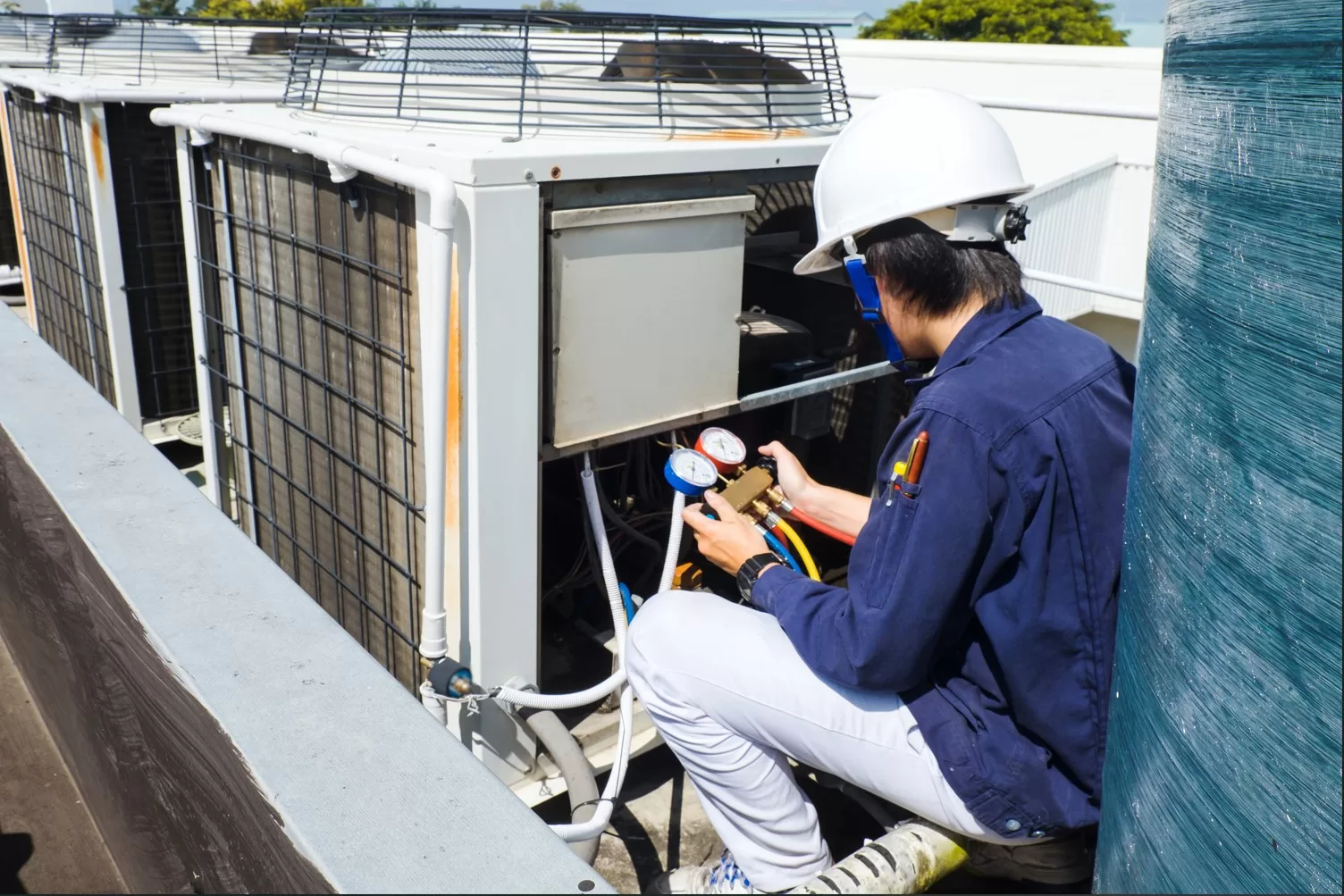
- System inspection: They will measure airflow, check refrigerant pressures if indicated, test voltages, and inspect the condenser and evaporator coils.
- Diagnostic explanation: You will get a plain-language summary of findings, photos if needed, and repair options with price estimates.
- Repair or recommendation: If repairs are straightforward, the technician will proceed with your approval. For major failures such as compressor replacement, they will discuss whether repair or full replacement is the most cost-effective choice given unit age and condition.
- Post-service checks: The tech will confirm cooling performance, thermostat accuracy, and show you the completed work. You will receive a written invoice and maintenance tips specific to Orlando humidity and seasonal concerns.
If you require immediate attention for safety or comfort, check our AC Repair services for scheduling options.
When to call an emergency HVAC contractor in Orlando
Some failures are urgent and warrant an emergency visit. Call QUICK AIR USA at (866) 207-8555 if you experience any of the following:
- No cooling during an extreme heat advisory, with vulnerable people in the home, such as infants or elderly occupants.
- Electrical burning smells, visible smoke, or repeated breaker trips tied to the AC.
- Rapid water intrusion from the AC that threatens floors or electrical systems.
- Loud metal grinding or banging from the compressor or fan that indicates imminent mechanical failure.
We provide 24/7 Emergency HVAC Repair, so you can get a licensed technician dispatched quickly. Using a licensed professional prevents unsafe DIY attempts and preserves manufacturer warranties.
Maintenance to reduce future AC repair needs in Orlando
Regular, seasonal maintenance lowers the chance of mid-summer breakdowns and extends system life. For mobile homes in Orlando consider these practices:
- Schedule annual tune-ups in spring, before peak cooling season, to check refrigerant, electricals, and airflow.
- Replace filters every 1 to 3 months during high use. Use the filter size your manufacturer specifies.
- Clean the outdoor unit and keep 2 feet of clearance around it to maintain airflow in pollen season.
- Protect wall sleeves and rooftop units with fasteners and seals that withstand hurricane-season winds.
- Ask your technician about a basic yearly plan focused on mobile home units, because seals and mounts should be inspected for movement and corrosion.
For a professional maintenance plan that covers both cooling and intermittent heating needs, see our Heating and Air Conditioning services.
Frequently asked questions
What is the $5000 AC rule?
The $5000 AC rule is a homeowner guideline used to decide between repairing an older air conditioner and replacing it. For mobile homes in Orlando, QUICK AIR USA uses a similar practical approach: if repair costs exceed roughly half the price of a quality new replacement and the unit is more than 10 to 12 years old, replacement is usually recommended. We will provide a written cost comparison during our inspection so you can see repair price, estimated remaining life, and efficiency gains from a new system.
How much does it cost to fix an AC?
Repair costs vary depending on the failure. In Orlando, simple fixes like a capacitor or contactor replacement often run lower than refrigerant or compressor work. Expect a service call diagnostic fee, then:
- Minor components (capacitor, contactor): lower cost parts and labor.
- Refrigerant leak repair and recharge: moderate to high, depending on access and refrigerant type.
- Compressor replacement or major mechanical repairs: can approach the cost of a new unit for older systems.
QUICK AIR USA will provide a clear estimate after diagnostics and explain options including emergency service if needed. Call (866) 207-8555 to schedule an inspection.
What is the 3 minute rule for AC?
The 3 minute rule refers to allowing an air conditioner a few minutes after startup to stabilize before declaring it broken. Many systems will take 2 to 3 minutes to build proper refrigerant pressure and airflow. If your unit runs but does not begin cooling after three minutes, or cycles on and off repeatedly, document the behavior and call a licensed HVAC technician. Repeated rapid cycling can indicate electrical or refrigerant issues that require professional diagnosis.
What is the most common AC problem?
The most common AC problem in mobile homes around Orlando is restricted airflow caused by dirty filters and blocked condensers. High humidity and pollen contribute to faster filter loading and coil buildup. Restricted airflow yields reduced cooling, frozen coils, and higher energy use. Regular filter changes and condenser cleaning are the best preventive measures, and QUICK AIR USA will inspect airflow on every service visit to find the root cause.
Ready to get started? Contact QUICK AIR USA – AC Services today.